NRG’s origins are associated with a committee formed to organise the Shire of Nillumbik’s event presenting an Apology and Memorandum of Understanding to Wurundjeri Elders.
Nillumbik Shire Council has a long-standing commitment to — and has been widely acknowledged for its leadership role in — reconciliation between Indigenous and non-Indigenous Australians, recognising the need for an inclusive inter-related community.
Nillumbik Reconciliation Group arose from an earlier reconciliation committee convened by the Nillumbik Shire Council in 1997 to assist with its comprehensive Statements of Apology and Commitment to Aboriginal Reconciliation, and the associated launch at the landmark Gayip celebration in Wingrove Park in 1998 that Indigenous leaders and one thousand Shire residents attended.
The group continued to meet as a Shire advisory committee, until it was reformed as the independent Nillumbik Reconciliation Group to continue advising and working with the Shire and other groups.
A critical aspect of Council’s commitment and leadership is the Charter, adopted by Nillumbik Shire Council on 29 January 2008 and launched by Nillumbik Shire Mayor, Councillor Warwick Leeson, and The Hon. Jenny Macklin MP, Minister for Families, Housing, Community Services and Indigenous Affairs, on Thursday 17 April 2008. The artwork was designed by Wurundjeri artist Mandy Nicholson for Moor-rul Viewing Platform in Kangaroo Ground.
It is reproduced here in full as both text and PDF.

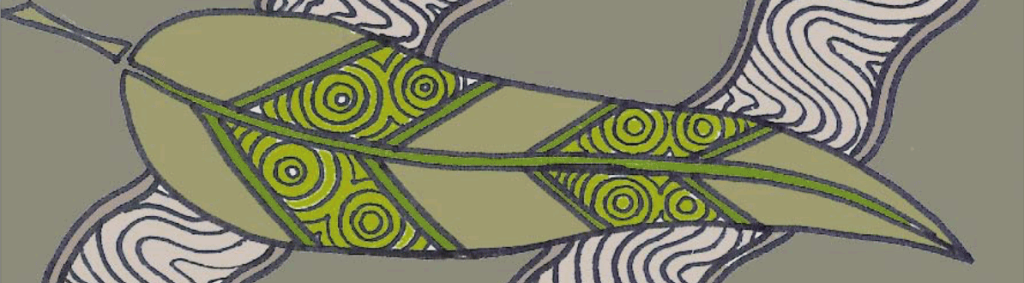
Artwork designed by Wurundjeri artist Mandy Nicholson for Moor-rul Viewing Platform in Kangaroo Ground.
Acknowledgement – Recognition – Respect – Action
Nillumbik Shire Council Reconciliation Charter
Background
Nillumbik Shire Council has a long-standing commitment to reconciliation between Indigenous and non-Indigenous Australians, recognising the need for an inclusive inter-related community.
The intention of this Charter is to outline Nillumbik Shire Council’s commitment to reconciliation, in a clear and easy-to-understand format, in line with the expectations of the Wurundjeri Elders and the broader local community.
Wurundjeri
The Wurundjeri is a language group of the Kulin Nation who lived in the watershed of the Yarra River. The language the Wurundjeri spoke was Woiwurung. Bunjil the eagle stands foremost in Wurundjeri culture; however, it was not the only totem, as all male members of the clan and all children had Waa the crow as their totem. Wurundjeri married women had Bunjil as their totem.
Nillumbik Shire Council – achievements in reconciliation
Nillumbik Shire Council has been widely acknowledged for its leadership role in contributing to the process of Indigenous Reconciliation. In 1997, under the themes of Acknowledgement and Celebration, Council initiated a historic, regional partnership Statement of Apology and Commitment to Aboriginal Reconciliation with Banyule, Manningham and Whitehorse City Councils.
In 1998 Council launched its own comprehensive Statements of Apology and Commitment to Aboriginal Reconciliation at the Gayip Celebration in Wingrove Park. Indigenous leaders and one thousand Shire residents attended the landmark event.
On 15 October 1999 Nillumbik Shire Council flew the Reconciliation flag – believed to be the first Victorian municipality to do so.
In 1999, Nillumbik Shire Council formalised Civic Recognition Protocols for acknowledging Wurundjeri traditional ownership of local lands and for flying the Aboriginal and Reconciliation flags on days of significance to Indigenous people.
Among other 1999 initiatives Council supported the formation of the community-based Nillumbik Reconciliation Group (NRG). The NRG was incorporated on 31 May 2000. The NRG continues its important role throughout the Shire of Nillumbik working to cultivate and promote the issues of reconciliation in the local region.
The meaning of Reconciliation
Reconciliation is the process of healing the community. A journey of acknowledgement, recognition, respect – it involves:
- addressing the causes of division and misunderstanding between Indigenous and other Australians
- parties taking responsibility and ownership of past injustices
- dealing with any continuing inequities in health, education,
justice and welfare - developing a shared, common understanding between
Australia’s Indigenous and non-Indigenous peoples.
The vision for reconciliation
The vision is for a united Australia which respects this land of ours; values its Indigenous heritage and provides equity and justice for all. Nillumbik Shire Council shares this vision as expressed by the Council for Aboriginal Reconciliation.
Reconciliation Acknowledgement Statement
The Mayor or appropriate Council representative delivers Council’s Reconciliation Acknowledgement Statement at the commencement of functions and all meetings sponsored or organised by Nillumbik Shire Council. This statement is found as Principle 1.
Principles of Reconciliation
Nillumbik Shire Council’s commitment to reconciliation with Indigenous Australians is based on the following principles:
- Nillumbik Shire Council acknowledges the Wurundjeri as the traditional custodians of the land now known as the Shire of Nillumbik and values the significance of the Wurundjeri people’s history as essential to the unique character of the Shire.
- Nillumbik Shire Council recognises that residents of the Shire include Indigenous people from clans other than the Wurundjeri, and that these people are disconnected from their own lands; in many instances this disconnection continues to impact upon them.
- We urge all levels of government, commerce and individuals to ensure Indigenous people enjoy equal social, health and economic conditions with all Australians.
- We recognise the distinctive and special spiritual and material relationship that Indigenous people have with the land and the water, including trees, rocks, hills and valleys, creeks, rivers and floodplains in the Shire of Nillumbik.
- We recognise and value the distinctive place of our Indigenous people in Australia’s identity; from their cultural heritage and care of the land, to their ongoing contributions in many fields including academia, agriculture, art, economics, law, sports and politics.
- We respect the spiritual relationship – both historical and living – between the land and its first peoples. It is therefore important that significant cultural heritage sites within the Shire of Nillumbik are identified and mapped.
- Nillumbik Shire Council acknowledges the ongoing impact of past policies and practices on Indigenous people, who in many instances continue to be disadvantaged by the effects of their displacement from their families, their land and traditional culture.
- We respect the Indigenous people’s right to live according to their own values and customs, subject to the law.
- Indigenous people have the right to share in all levels of decision-making on matters which affect them and their communities.
- We acknowledge the important ongoing role of the Nillumbik Reconciliation Group and other local groups and individuals, and support their continued role in reconciliation.
- Nillumbik Shire Council accepts its responsibility in ensuring these principles are adhered to and acted upon, and commits to facilitating and participating in programs and activities that confirm and display our commitment to Reconciliation and Indigenous issues.
- We commit to developing a Reconciliation Action Plan (RAP), consulting with Wurundjeri Elders, the Nillumbik Reconciliation Group and other stakeholders.